The 50/30/20 rule, with a worked example
The 50/30/20 rule is a budgeting rule that splits your take-home pay three ways: 50% for needs, 30% for wants, and 20% for savings and paying down debt. Below is what goes in each part, a worked example in dollars and pesos, and how to set it up in Outlayr.


| Part | Share | On $3,000 a month | On MX$20,000 a month |
|---|---|---|---|
| Needs | 50% | $1,500 | MX$10,000 |
| Wants | 30% | $900 | MX$6,000 |
| Savings and debt | 20% | $600 | MX$4,000 |
Worked on take-home pay, after taxes. Paid every two weeks? Multiply one paycheck by 26 and divide by 12 to get a month.
- Needs
- 50%: rent, groceries, utilities, transport, insurance, minimum debt payments
- Wants
- 30%: eating out, streaming, shopping, trips
- Savings and debt
- 20%: emergency fund, retirement, paying debt down faster
- Based on
- Take-home pay, after taxes and deductions
- Where it comes from
- All Your Worth (2005), by Elizabeth Warren and Amelia Warren Tyagi
- Calculator
- Free, for weekly, two weekly, monthly, or yearly pay
What is the 50/30/20 rule?
The 50/30/20 rule is a way to budget that gives half of your take-home pay to needs, 30% to wants, and 20% to savings and debt.
Elizabeth Warren and her daughter, Amelia Warren Tyagi, set it out in their 2005 book All Your Worth: The Ultimate Lifetime Money Plan. It is a starting split, not a law: it tells you how much room each part gets before you have a month of real numbers.
Needs, wants, and savings
Needs are the bills you have to pay to live and work: rent, groceries, utilities, transport, insurance, and the minimum on each debt.
Wants are what you could cut without a penalty, like eating out, streaming, shopping, and trips. Savings is what you set aside, plus anything you pay on a debt above the minimum.
A worked example
Take $3,000 a month after taxes. Needs get up to $1,500, wants up to $900, and $600 goes to savings or debt. On MX$20,000, the same split is MX$10,000, MX$6,000, and MX$4,000.
Now say rent alone is $1,100. With groceries at $300, utilities at $120, and transport at $90, needs reach $1,610, which is $110 over. Take the $110 from wants, which leaves $790, and keep the $600 for savings as it is.
When 50/30/20 doesn't fit
If rent takes most of your pay, needs can run past 50%. A 60/20/20 or 70/20/10 split is a more honest start, and the calculator does those too.
If your income changes from month to month, build the split on a low month and treat anything above it as extra savings.
How to do it in Outlayr
Outlayr is the expense tracker that never links your bank: log by sentence, voice, receipt or Apple Pay, in any of 165 currencies.
1. Work out your three amounts with the 50/30/20 calculator.
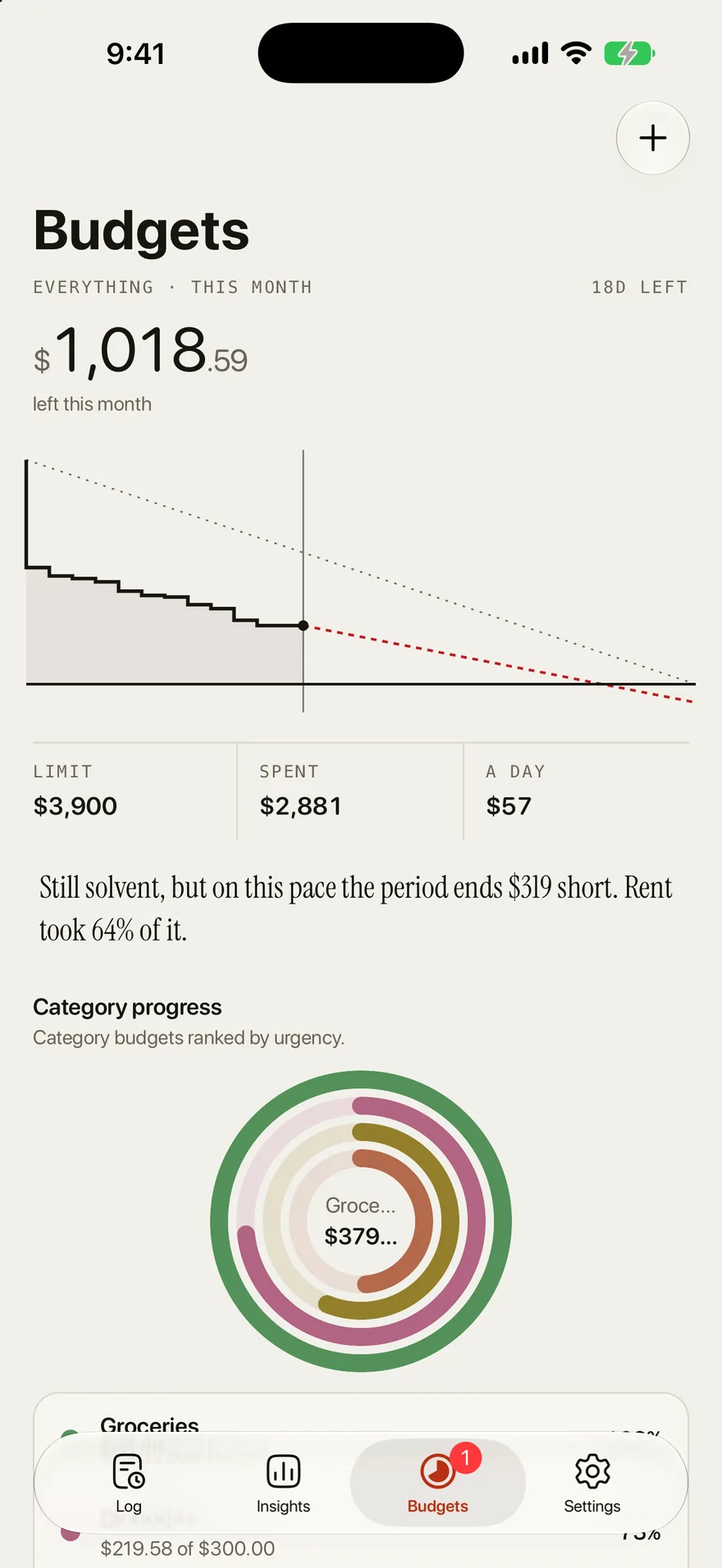
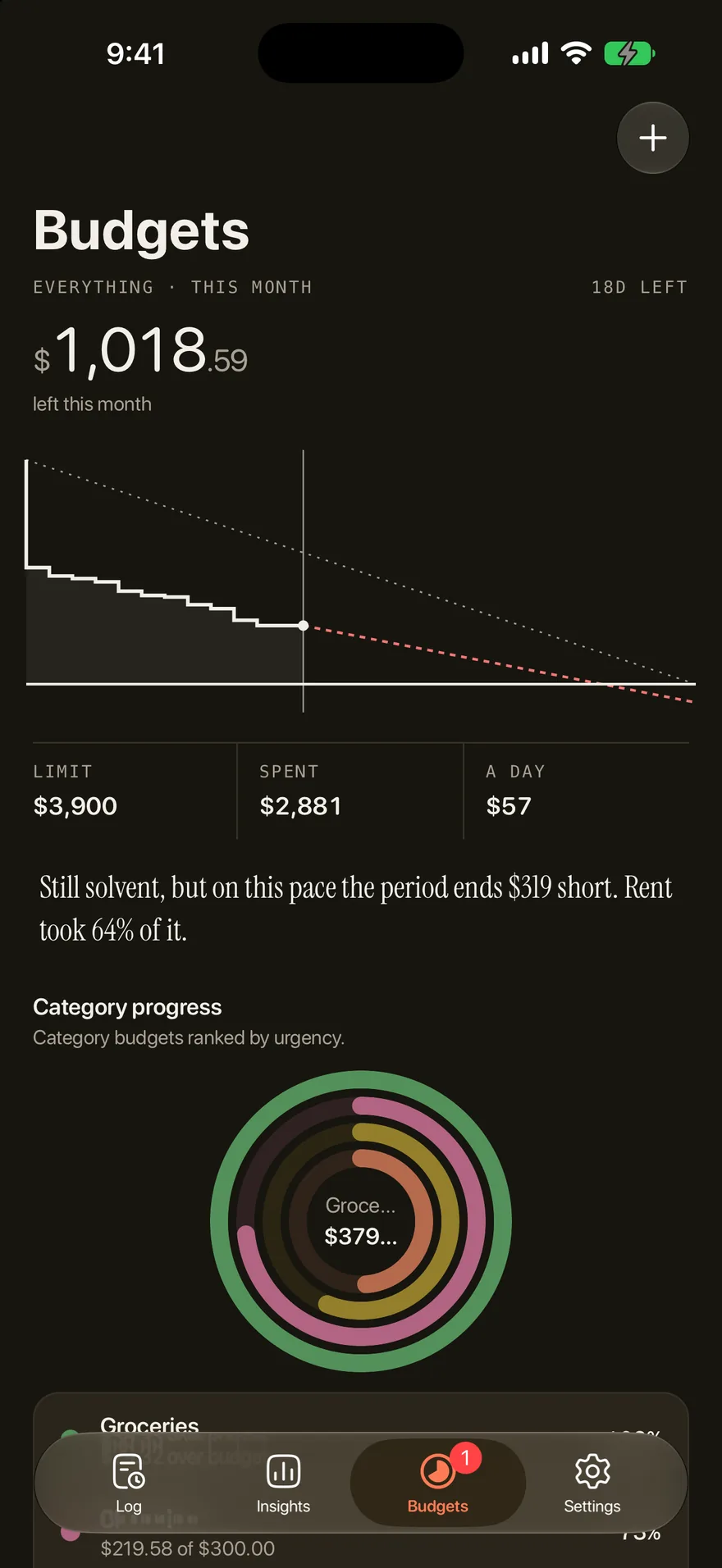
2. In Balances, under Categories, set one overall budget for needs and wants together: 80% of your take-home pay.
3. Add category budgets for the wants that leak most, like Dining Out or Entertainment. The free plan includes 2 category budgets; Outlayr Pro has no limit.
4. For the 20%, create a savings goal in Balances. A goal names an amount, an account, and a date, and tells you what that costs a month.
5. If you are paid on the 15th, set your month to start on the 15th in Settings, under Time frames, so budgets run from payday to payday.
Questions
What is the 50/30/20 rule in simple terms?
Of every 100 you take home, spend up to 50 on what you must pay, up to 30 on what you choose to, and keep at least 20 for savings or extra debt payments.
Is the 50/30/20 rule based on gross or net pay?
On net pay: what lands in your account after taxes and deductions. If your employer takes retirement savings out of your paycheck, you can count it toward the 20%.
Where do debt payments go?
Minimum payments are needs. Anything you pay above the minimum counts as savings, since it lowers what you owe.
Is the 50/30/20 rule realistic?
With a high rent, often not at first. Use it as a starting point, or try 60/20/20 or 70/20/10, and adjust after a month of logging. What matters most is that savings gets its share before wants do.
Does Outlayr have a 50/30/20 budget?
Not as a preset. You set it up with an overall budget for needs and wants, category budgets for the wants you want to watch, and a savings goal for the 20%.
Track every expense in one sentence
Free to start. No ads on any plan.
Keep reading
Calculators
50/30/20 budget calculator
Split your take home pay into needs, wants, and savings, by the 50/30/20 rule or a stricter split.
Guides
Budget categories: the list to start with (2026)
Budget categories are the groups you sort your spending into, like rent, groceries, or dining out, so you can give each one a limit. Here is a list of ten to start with, the same ten Outlayr sets up when you install it, how to size each limit, and an example in dollars and pesos.
Guides
Plan a budget and see where this pace ends
Outlayr sets a budget per category or one for the whole month, carries over what you did not spend, and says where your current pace ends before the month does.